Burns Valley Creek
Major Juvenile Nursery
Enters Clear Lake in the Lower Arm near the city of Clearlake. In 2024 this creek produced the most documented juvenile hitch of any surveyed tributary: ~4,000 juveniles and thousands of larvae recorded by Lake County WPD.
263-2344
In 2024, Burns Valley Creek produced the strongest documented juvenile output of any surveyed tributary. Lake County WPD recorded counts across three life stages (larvae, juveniles, and adults) in the same survey window.
Adult spawner counts tell you fish are there. Juvenile and larvae counts tell you reproduction actually succeeded. Burns Valley Creek in 2024 showed both, making it one of the strongest signs of real population productivity in recent monitoring data.
Where the Next Generation Is Born
Burns Valley Creek plays a distinct role in the hitch lifecycle compared to streams like Kelsey or Adobe. While those creeks are primarily documented through adult spawner counts, Burns Valley in 2024 became the standout nursery stream, with ~4,000 juvenile hitch and thousands of larvae recorded by Lake County WPD. That is reproduction confirmed all the way to the next generation, the stage of the cycle that usually fails.
The creek enters Clear Lake's Lower Arm near the city of Clearlake, draining the Burns Valley corridor southeast of the lake. Sacramento blackfish juveniles were also documented alongside the hitch in 2024, indicating a healthy multi-species nursery environment when flows are adequate.
★ Standout 2024 Nursery
~4,000 juvenile hitch and thousands of larvae confirmed by Lake County WPD in 2024. Also documented Sacramento blackfish juveniles, a healthy multi-species nursery.
📍 Location
Enters the Lower Arm of Clear Lake near the city of Clearlake. Drains the Burns Valley corridor SE of the lake.
⚠ June 14 Flow Cutoff (2024)
Flow ceased June 14, 2024. Given the large juvenile population documented that year, the timing of cutoff relative to juvenile emigration readiness is critical.
🐟 Multi-Species Value
Sacramento blackfish juveniles were also documented alongside hitch in 2024, confirming Burns Valley supports multiple native species.
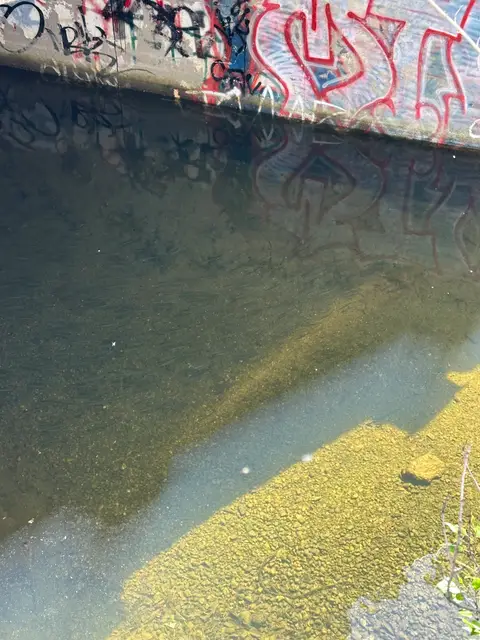
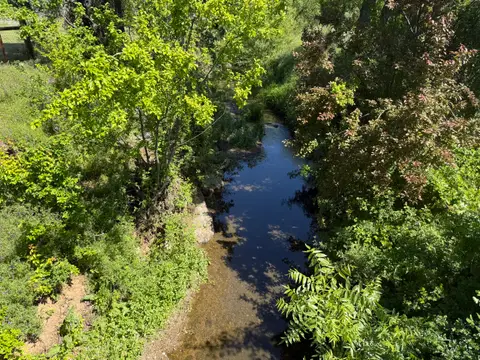
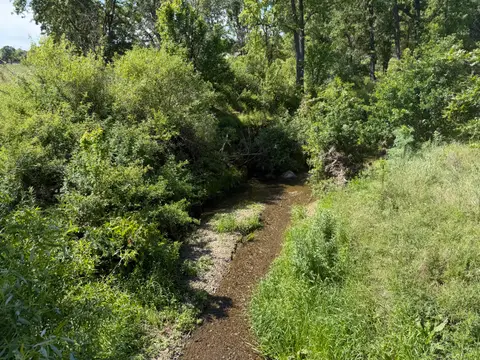
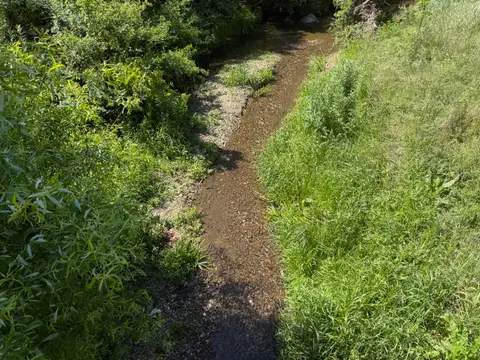
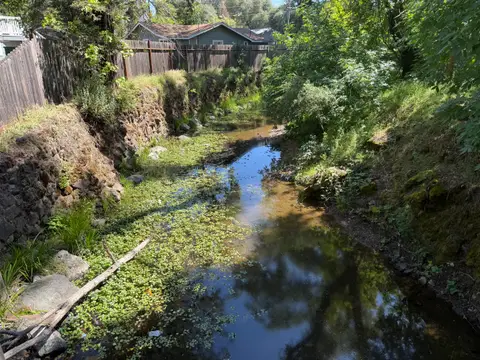
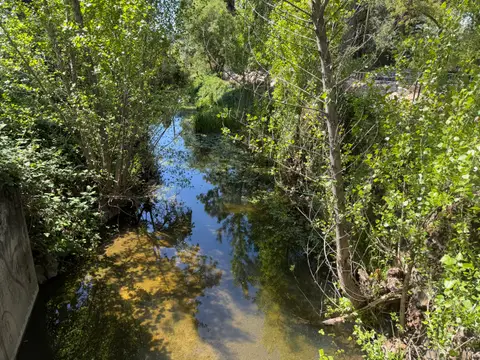
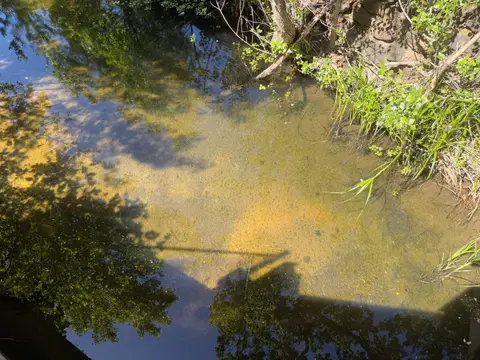
Burns Valley Creek in the field
Juvenile hitch and blackfish near the mouth at Lakeshore Drive, and the LCWPD survey reaches along Burns Valley Road — facing up and downstream.
Annual Observations: Burns Valley Creek
| Year | Burns Valley Status | Lake-wide Count | Notes |
|---|---|---|---|
| 2025 | Surveyed | 1,567 | Lake-wide spawner count; Burns in the WPD survey program |
| 2024 | Juvenile nursery | 1,042 | Burns documented ~4,000 juvenile hitch and thousands of larvae (Lake County WPD) |
| 2023 | Record year | 2,548 ★ | Lake-wide record after heavy winter rains |
| 2022 | Drought | 306 | Lake-wide drought year, marginal flow |
| 2021 | Drought | 120 | Catastrophic drought: tributaries ran dry |
| 2020 | Not the host | 1,672 | All 1,672 lake-wide hitch were in Kelsey Creek that year |
| 2019 | Below average | 612 | Kelsey was the primary stream that season |
| 2018 | Active | 1,153 | Adobe led lake-wide; Kelsey major contributor |
| 2017 | Baseline | 517 | First year of USGS baseline gillnet surveys |